
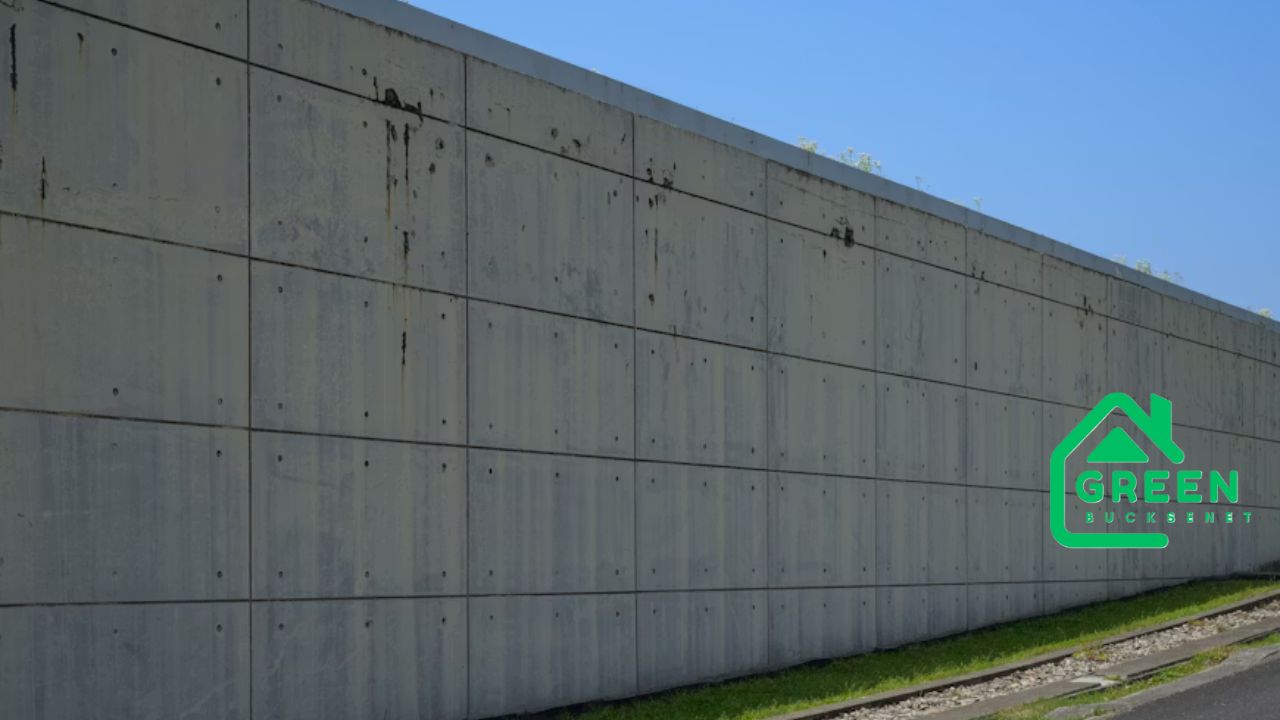
Have you ever wondered what separates your apartment from your neighbor’s? It’s more than just a simple divider; it’s a demising wall, a crucial component in modern construction that ensures privacy, safety, and clear boundaries. These specialized walls are fundamental in defining separate tenant spaces within a larger building, from bustling office complexes to quiet residential condos.
Understanding the role of a demising wall is essential whether you’re a tenant, a property owner, or a developer. These structures are not just about creating physical separation; they are engineered systems designed to provide sound insulation, fire resistance, and legal demarcation. Let’s explore what makes them so important.
Demising Wall at a Glance
| Feature | Description | Importance |
|---|---|---|
| Primary Function | To separate adjacent tenant spaces or a tenant space from a common area. | Defines legal boundaries and ensures tenant privacy. |
| Key Characteristics | Sound insulation, fire resistance, structural integrity. | Crucial for safety, comfort, and meeting building codes. |
| Common Materials | Metal studs, drywall (gypsum board), insulation (mineral wool). | Materials are chosen to meet specific performance requirements. |
| Typical Locations | Apartments, condos, office buildings, retail centers, mixed-use properties. | Used anywhere multiple tenants occupy a single building. |
What Exactly Is a Demising Wall?
At its core, a demising wall is a partition that separates one tenant’s leased space from another’s. The term “demise” itself means to transfer property by lease. Therefore, this wall is the physical manifestation of that legal separation, running from the structural floor slab up to the structural ceiling above.
This floor-to-ceiling construction is a defining feature. Unlike a standard partition wall that might stop at a dropped ceiling, a demising wall extends fully to create a complete and secure enclosure. This design is what gives it the power to block sound, stop the spread of fire, and provide a true sense of having your own distinct space.
The purpose goes beyond simple division. A properly constructed demising wall is a performance-driven assembly. Its design must adhere to strict building codes that mandate specific levels of fire resistance and sound control, ensuring the well-being and comfort of everyone in the building.
Types of Demising Walls: More Than Just a Barrier
Not all demising walls are created equal. Their construction varies significantly based on the building’s purpose and the specific performance requirements. The choice of materials and design creates a wall tailored for its environment.
Fire-Rated Demising Walls
Safety is the paramount concern in any multi-tenant building, making fire-rated walls a non-negotiable standard. These walls are engineered to contain a fire within a single unit for a specified period, allowing occupants in adjacent spaces to evacuate safely.
How They Work
A fire-rated demising wall is rated in hours (e.g., 1-hour, 2-hour). This rating indicates how long the wall can withstand fire and prevent it from spreading. This is achieved through specific construction techniques and materials:
- Specialized Drywall: Type X or Type C gypsum board contains additives that improve its fire-resistant properties. Multiple layers are often used to increase the rating.
- Fire-Rated Sealants: All gaps and penetrations for pipes, ducts, or wiring must be sealed with fire-stopping caulk or putty. This prevents smoke and flames from finding a path through the wall.
- Metal Studs: Steel studs are commonly used as they don’t burn like wood, maintaining the wall’s structural integrity for longer during a fire.
The result is an incredibly robust barrier that compartmentalizes a fire, saving lives and limiting property damage. Without a proper fire-rated demising wall, a small kitchen fire in one apartment could rapidly become a catastrophe for the entire building. Discover innovative architectural design solutions at kdarchitectsnet.org, delivering modern, functional, and sustainable architecture tailored to your vision.
Soundproof Demising Walls
Have you ever been frustrated by hearing your neighbor’s conversations, music, or television? This is where acoustically-rated demising walls become invaluable. Their purpose is to minimize sound transmission between units, creating a peaceful and private living or working environment.
The Science of Soundproofing
Sound control is measured by a Sound Transmission Class (STC) rating. A higher STC rating means better sound insulation. A standard wall might have an STC of 35, where loud speech is audible. A well-designed demising wall aims for an STC of 50 or higher, at which point loud speech is generally not heard.
Several strategies are used to achieve this:
- Mass: Adding mass with multiple layers of drywall makes it harder for sound vibrations to pass through.
- Decoupling: Creating a gap between wall structures is highly effective. This can be done with a double-stud wall (two separate rows of studs) or by using resilient channels, which are metal strips that separate the drywall from the studs. This decoupling breaks the path for sound vibrations.
- Insulation: Filling the cavity within the demising wall with acoustic insulation, like mineral wool or fiberglass, absorbs sound and reduces echo.
The emotional impact of good soundproofing is immense. It transforms a residence from a noisy, shared space into a private sanctuary, dramatically improving quality of life.
Basic Partition Demising Walls
In some cases, such as within a single company’s office space, a demising wall may not require the high-level fire or sound ratings needed for residential units. These simpler partitions might be used to separate different departments.
While they still extend from floor to ceiling to mark a boundary, the construction can be less complex. They might use standard drywall and insulation, focusing primarily on creating a visual and physical separation rather than meeting stringent code requirements for sound or fire. However, they remain a demising wall by definition because they separate distinct operational areas.
The Powerful Benefits of a Well-Built Demising Wall
The investment in a high-quality demising wall pays off in numerous ways, benefiting tenants, owners, and developers alike. These advantages go far beyond simply drawing a line between two spaces.
- Unmatched Privacy and Comfort: This is perhaps the most immediate and appreciated benefit for tenants. A wall that effectively blocks sound creates a serene environment, free from the disturbances of neighbors. This fosters a sense of personal space and tranquility that is essential for well-being.
- Critical Life Safety: The fire-resistance aspect cannot be overstated. By containing fire and smoke, these walls provide the precious time needed for evacuation and for firefighters to respond. This is a fundamental component of a building’s overall life safety system.
- Clear Legal and Financial Boundaries: For property owners and managers, the demising wall is a clear line of demarcation. It defines the exact square footage a tenant is leasing, which is crucial for calculating rent. It also clarifies responsibility for maintenance and repairs.
- Enhanced Property Value: Buildings with superior soundproofing and safety features are more desirable to potential tenants and buyers. A quiet and safe building can command higher rents and has a better reputation in the market, making it a more valuable asset.
- Cost-Effective Construction: While they require specific materials and techniques, building one robust demising wall between two units is more efficient than building two separate, independent walls. This streamlined approach saves on both materials and labor during the construction phase.
User Perspectives: The Lived Experience
While we don’t have formal star ratings for walls, tenant feedback consistently highlights their importance.
A common sentiment found in apartment reviews is frustration over poor sound insulation. One tenant in a newer complex noted, “The building looks beautiful, but the walls are paper-thin. I can hear everything my neighbor does. It’s impossible to feel at peace in my own home.” This illustrates the profound negative impact of a poorly executed demising wall.
Conversely, positive reviews often praise the feeling of solitude. A condo owner shared, “I was worried about noise moving into a large building, but it’s wonderfully quiet. The developers clearly invested in proper soundproofing between the units. It makes all the difference.” This feedback underscores the value tenants place on the privacy a good demising wall provides.
Demising Walls in Action: Real-World Scenarios
The application of demising walls is all around us in urban and suburban environments.
Case Study 1: The High-Rise Apartment Building
In a new 30-story residential tower, each unit is separated by a 2-hour fire-rated demising wall with an STC rating of 55. The wall assembly consists of double steel studs, two layers of Type X drywall on each side, and high-density mineral wool insulation filling the cavity. This robust construction ensures that a fire in one unit won’t breach the adjacent one for at least two hours and that daily noise from neighbors is practically non-existent.
Case Study 2: The Shopping Mall
Consider a large retail mall with dozens of stores. Each store, from a small boutique to a large anchor department store, is separated by a demising wall. These walls define the leased space for which the tenant pays rent. They are also fire-rated to prevent a fire in one store from spreading to the entire mall, a critical safety feature in a high-traffic public space.
Case Study 3: The Modern Office Building
An open-plan office building leases out its floors to multiple companies. To divide a floor between two different tech firms, the property owner constructs a demising wall. Here, the primary focus might be sound control to ensure confidential conversations in one company aren’t overheard in the other. The wall might also include enhanced security features to control access between the two separate tenancies.
Frequently Asked Questions (FAQs)
What is the main difference between a demising wall and a regular partition wall?
The biggest difference is its function and construction. A demising wall always separates two different tenant spaces or a tenant space from a common area. It must run from the structural floor to the structural ceiling and typically has fire and sound ratings mandated by code. A regular partition wall simply divides space within a single tenancy and may stop at a dropped ceiling.
Who is responsible for paying for the demising wall?
Typically, the landlord or developer is responsible for the base construction of the demising wall as part of the building’s core and shell. The cost is factored into the overall construction budget and reflected in the lease rates.
Can a demising wall have windows or doors in it?
Generally, no. To maintain its fire rating and acoustic integrity, a demising wall must be a solid, uninterrupted barrier. Any openings would need to have the same fire and sound rating as the wall itself (e.g., a fire-rated door assembly), which is complex and often avoided. Openings are typically placed in other walls of the tenant space.
How thick is a typical demising wall?
The thickness varies based on its rating. A simple wall might be 4-5 inches thick. However, a high-performance demising wall with a 2-hour fire rating and high STC rating, using double studs and multiple layers of drywall, could easily be 8-12 inches thick or more.
A Foundation for Harmony and Safety
The demising wall is far more than a simple divider. It is a sophisticated, hard-working system that is fundamental to the successful operation of any multi-tenant building. It provides the legal separation for leases, the acoustic privacy for peaceful living, and the critical fire protection that saves lives.
While it may be hidden behind a layer of paint, its presence is felt every day in the quiet comfort of your apartment or the secure confines of your office. The next time you are in a building shared by many, take a moment to appreciate the incredible engineering of the demising wall—the unsung hero creating your personal space in a crowded world.